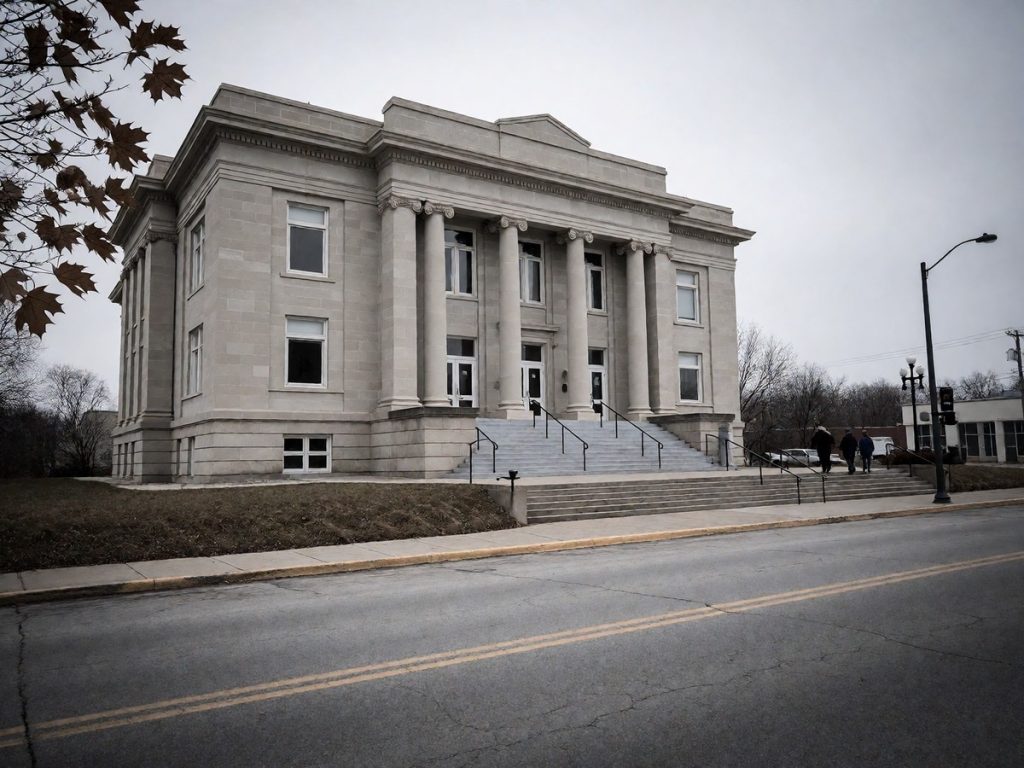
Verdict in Jackson County
A Jackson County jury convicted 35-year-old Betty Akamani of first-degree murder, a firearm enhancement charge, and endangering the life or health of a child on Thursday, November 19. The verdict follows the September 19, 2026, shooting of her estranged husband, 48-year-old Southern Illinois University Carbondale professor Kofi Akamani. Akamani faces a possible sentence of 85 years to natural life in prison. Prosecutors successfully argued that the shooting followed years of conflict during the divorce proceedings, which Kofi Akamani initiated in February 2026. Under the court-approved arrangement, the daughters spent Wednesdays and Fridays with their father. The trial lasted four days and involved 20 witnesses and 160 pieces of evidence. The shooting occurred in Murphysboro as the professor sat in a vehicle outside a residence.
Evidence against the defendant
Evidence presented at trial contradicts the self-defence claims made by Akamani. She told the court that she watched her husband through a keyhole and saw him pointing a gun toward a child’s bedroom as he approached his vehicle. Investigators found no firearm on the professor or in his vehicle, and they found no evidence that he was sexually trafficking his daughters. Prosecutors presented home surveillance footage showing Akamani shooting at her husband from the porch before she went inside to reload and fire again as he called for help. While the defendant claimed she was "super, super scared," Detective Brianna Hayes testified that Akamani appeared calm at a restaurant called The Turn in Marion. Akamani spent $120 on a meal consisting of filet, shrimp, salad, and alcoholic drinks that afternoon. Although the defendant claimed she feared for her daughters, Assistant State’s Attorney Sophia Allen told the jury that Akamani did not call 911 or intervene but instead went to a restaurant to eat. Investigators used surveillance recordings from Texas Roadhouse and the Marion Carnegie Library to confirm that the family did not enter a bathroom together as the defendant alleged. Defense lawyer Celeste Korando argued that Akamani believed she was facing a threat that justified the use of deadly force. The prosecution also noted that Akamani’s self-defence explanation only emerged during a telephone conversation with her sister from the Jackson County Jail, where she said she needed a lawyer to help establish a self-defence case. This conversation undermined her claim that she acted out of immediate fear. The jury also heard about a disagreement over Kofi Akamani’s mail, as he continued to receive correspondence at the residence despite the separation. While Akamani described him as angry, the children testified they did not hear him shouting.
Impact of the tragedy
The shooting occurred after Kofi Akamani returned his two daughters from a scheduled visit involving Texas Roadhouse, the Marion Carnegie Library, and Starbucks. The children testified that their father never sexually abused them, and one child recorded the shooting from a bedroom window to preserve evidence for her father’s custody case. During a forensic interview with the Perry-Jackson Child Advocacy Centre, one daughter identified her mother as the person who made her feel frightened or uncomfortable. She also described her father as "the nicest person on planet Earth." State’s Attorney Marsha Cascio-Hale stated that Kofi Akamani’s name is clean and that investigators found no truth in the allegations made by Akamani. Cascio-Hale also noted that the verdict cannot repair the loss for the two children. Angela Odom, the chief executive officer of the Survivor Empowerment Centre, said the children are survivors who lost both parents. Solomon Abache, the younger brother of the deceased professor, said the verdict provides a measure of closure for a family still grieving the loss. Colleagues of the professor held a vigil in October to honor his life and his work in forestry and education.