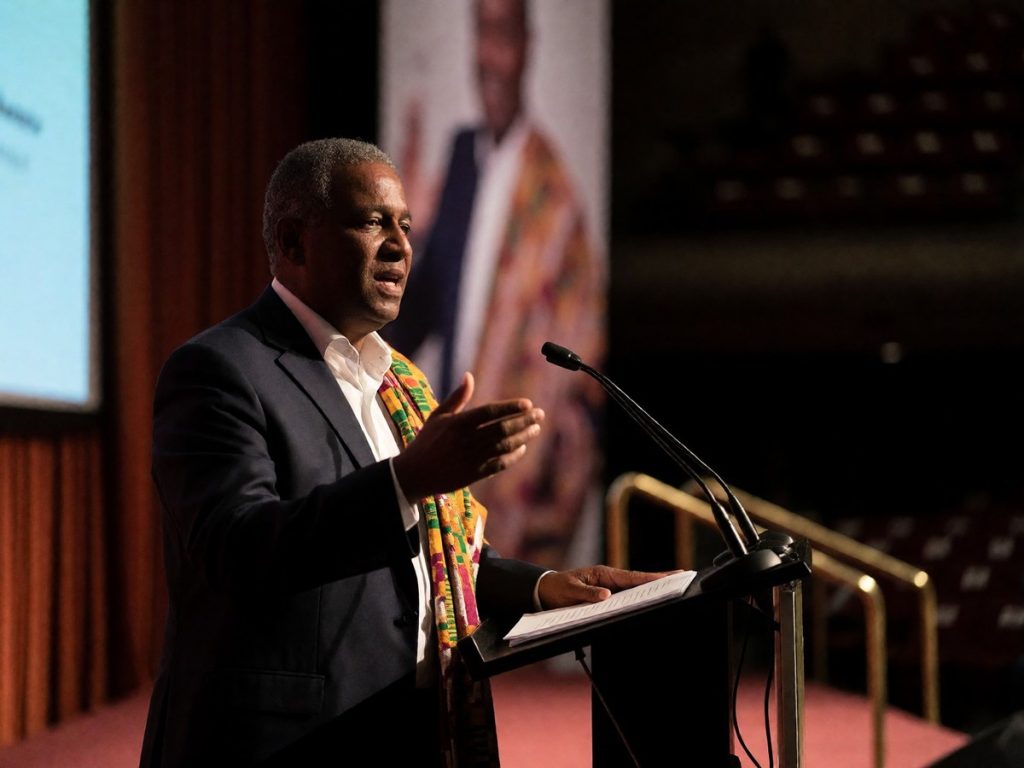
I find the economic imbalance described by Dapo Olorunyomi to be a direct threat to the survival of independent journalism across Africa. Olorunyomi spoke at the opening of the 2026 Media and Development Conference in Abuja on Monday, November 23. He described the current relationship between tech giants and media as a form of "extraction." He argues that while African journalists produce investigations, news reports, and other public-interest content, powerful technology companies operating outside the continent capture the economic value through digital distribution. This imbalance results in declining advertising revenues, shrinking editorial budgets, and the loss of experienced journalists. He warns that African societies risk becoming mere suppliers of digital content, data, and audiences while others own the infrastructure, determine the rules, and capture all the economic benefits of the emerging digital economy. I agree with his assessment that technology has become democratic infrastructure, and he notes that infrastructure without accountability is simply monopoly power. He calls for fair compensation arrangements between technology companies and African news publishers, especially for journalism used to develop artificial intelligence systems. He also demands transparency in how digital platforms rank, distribute, and amplify information during elections or periods of heightened political activity. The conference theme, "Media, Technology and the Future of Democratic Societies", brings together journalists, policymakers, researchers, and civil society organisations to examine these shifts.
AI Capabilities and the Risk of Deception
Olorunyomi acknowledges that artificial intelligence can reduce costs for transcription, support research, translate information into local languages, and analyze large volumes of data. These tools allow tasks that previously required substantial financial and technical resources to occur more efficiently. However, I find his warning regarding the speed of deception more significant than these efficiency gains. He says AI can generate falsehoods and reproduce historical biases. These tools flood information spaces with synthetic text, audio, images, and videos at a speed that overwhelms verification. He notes that the speed at which false information circulates can outpace the capacity of journalists and independent institutions to verify facts, particularly when manipulated audio and video recordings spread during elections. I also find his concern regarding the underrepresentation of African languages, cultural experiences, and local knowledge in AI datasets to be a major issue for media independence. He warns that this underrepresentation affects the accuracy and reliability of AI-generated information and could further marginalize African societies in the digital economy. To counter this, Olorunyomi urges African media organizations to introduce clear editorial policies where machine-generated materials undergo rigorous human verification to protect professional judgment. He stresses that "automation and convenience must never displace professional judgement" and that artificial intelligence must serve journalism. He also points out that the speed of deception can exceed the capacity of institutions to establish the truth. He urges African governments, universities, and research institutions to invest in local AI capabilities and digital infrastructure so the continent does not remain a passive consumer of foreign technology. He maintains that Africa must become an "active architect, owner and beneficiary" of its own digital future.