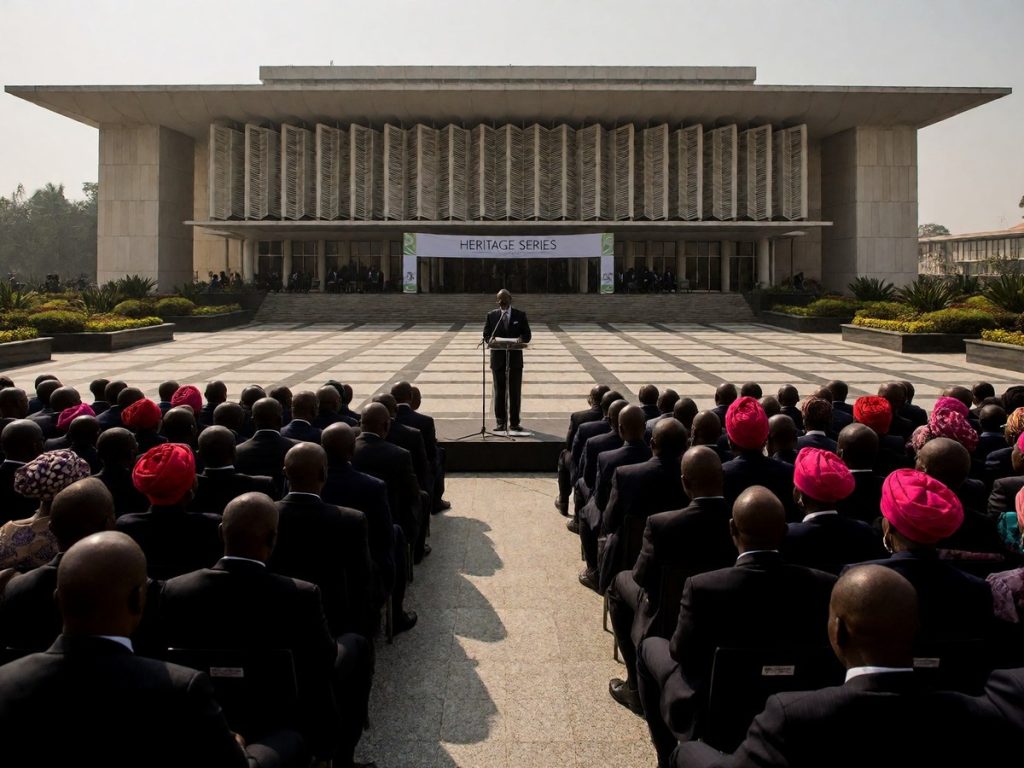
Dr. Johnson Pandit Asiama met with representatives of the families of distinguished Ghanaians on Wednesday, November 25, to discuss their relatives’ portraits on the new Ghana Cedi Heritage Series. This meeting at Bank Square followed public controversy regarding the identity of the person on the GH¢50 banknote. Some members of the public suggested the portrait resembles Dr. Letitia Obeng, the younger sister of flag designer Theodosia Salome Okoh, more than it resembles Okoh herself. The Bank of Ghana issued a clarification on November 13, stating they developed the image from various photographs of Okoh and modified it into an engraved artistic representation to meet the technical and security requirements of banknote production. The Bank also changed her head-tie to a hairstyle common during the period. I find the Bank’s claim that these technical modifications caused the resemblance to Dr. Obeng to be an incredibly weak excuse for the portrait’s inaccuracy. The redesigned notes, which President John Dramani Mahama and Dr. Asiama unveiled on November 12, 2026, at the Bank of Ghana headquarters in Accra, include enhanced security features and utilize reinforced cotton paper.
New denominations and budget
The redesigned series includes portraits of prominent Ghanaians whose contributions span politics, education, religion, culture, justice, commerce, and national identity, alongside images of national landmarks. These notes enter circulation on December 1, 2026, while the existing series remains legal tender.
| Denomination | Personality |
|---|---|
| GH¢1 | Agnes Oforiwa Tagoe-Quarcoopome |
| GH¢2 | Cardinal Peter Porekuu Dery |
| GH¢5 | James Emmanuel Kwegyir-Aggrey |
| GH¢10 | Justice Annie Jiagge |
| GH¢20 | Dr. Ephraim Amu |
| GH¢50 | Theodosia Salome Okoh |
| GH¢100 | Kofi Annan |
| GH¢200 | Dr. Kwame Nkrumah |
The personalities, whose contributions span politics, education, religion, culture, justice, commerce, and national identity, appear on the GH¢1, GH¢2, GH¢5, GH¢10, GH¢20, GH¢50, GH¢100, and GH¢200 denominations respectively. During the engagement, Dr. Asiama and First Deputy Governor Dr. Zakari Mumuni spoke with the families about the selection process. Dr. Asiama explained that the initiative intended to recognize contributions to the country’s development and preserve legacies for future generations. The families expressed gratitude to the Bank of Ghana, describing the gesture as a fitting tribute to the memories of their loved ones. MP Attah Issah argued that the printing costs for these notes are already covered by the Bank of Ghana’s approved 2026 budget. He stated that the Minority’s approach to demanding accountability for the expenditure is misplaced because Parliament possesses several other tools to determine how much the central bank spent on the exercise. He also defended Dr. Asiama, calling him a fine gentleman who makes himself available whenever Parliament needs him.
Parliamentary scrutiny
Dr. Tiah Abdul Kabiru Mahama, the MP for Walewale, criticized the Bank of Ghana for failing to involve Parliament in the two-year consultation process. He argued that the Bank of Ghana should have made more effort to involve MPs, as they represent constituents and help explain national policy decisions. He also demanded that the Bank of Ghana explain the cost of the exercise and how they decided which personalities to include. He questioned whether the decision-making process adequately considered other people who contributed to the country’s development. Dr. Mahama noted that the people of Ghana deserve to know the principles that informed the choice of personalities. He also questioned why another person, whom he identified as her sister, reportedly replaced a personality initially expected to appear on the notes.
Under Parliament’s committee arrangements, operational matters relating to the Bank of Ghana fall under the Economy and Development Committee, while the Finance Committee retains responsibility for matters concerning the central bank’s budget and appropriation. Attah Issah maintained that the debate should focus on the decision to remove members of the Big Six from the currency designs rather than the printing costs. He argued that Ghana’s independence struggle involved many ordinary Ghanaians beyond the six celebrated figures. He noted that the central bank already took steps to address concerns through question-and-answer notices and media engagements.