Orbital computing infrastructure
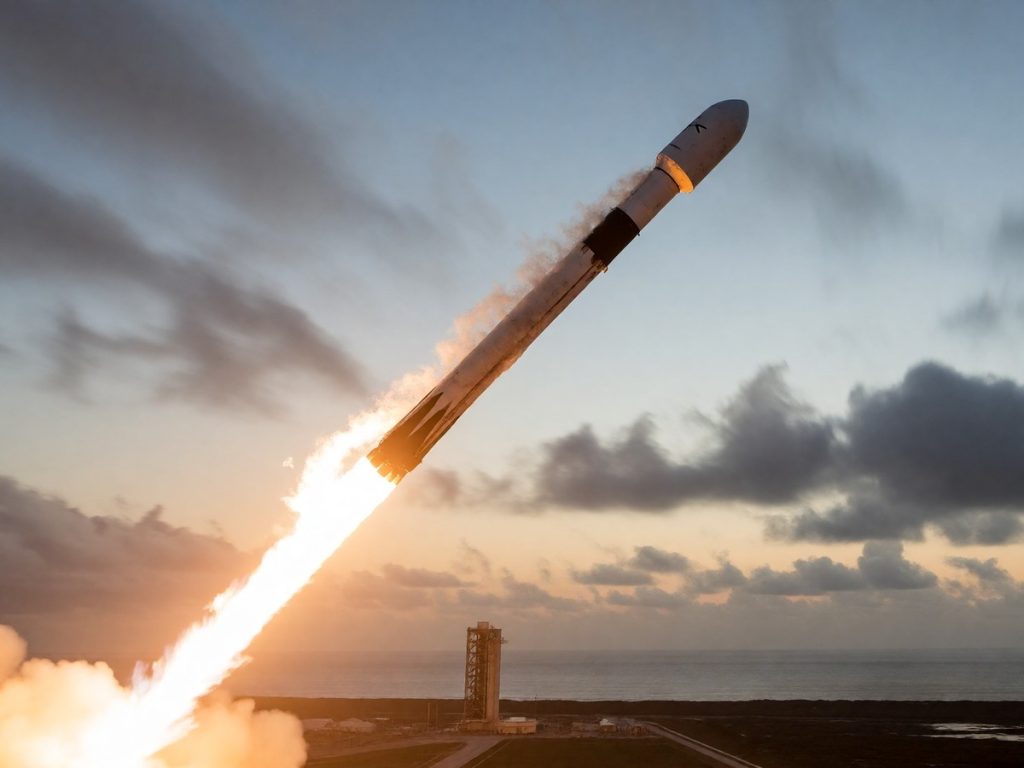
The Federal Communications Commission authorized SpaceX to deploy one million orbital compute modules named Starmind to support the American super intelligence economy by moving AI data processing into low-Earth orbit. These satellites will use sunlight to power computing tasks at altitudes ranging from 500 to 2,000 kilometers. I find this authorization the most significant leap for computing infrastructure in recent history. The satellites will communicate via the Starlink network to relay processed data back to Earth. SpaceX must begin deployment no later than November 2033, reach 10% deployment by November 2035, and hit 50% by November 2038. The company intends to launch its first Starmind satellite next year.
| Feature | Specification |
|---|---|
| Project Name | Starmind |
| Satellite Count | 1,000,000 |
| Orbital Altitude | 500-2,000 km |
| Initial Deployment Deadline | November 2033 |
| 10% Deployment Deadline | November 2035 |
| 50% Deployment Deadline | November 2038 |
Elon Musk, the owner of SpaceX, wrote on X, "Much appreciated. This will be a great asset to America and the world." The FCC stated that this solar-powered system promises to bring the human race closer to a Kardashev II civilisation, a hypothetical society proposed by an astronomer in the 1960s that can harness the full power of its home star. Other firms, including Google and Blue Origin, are also exploring the concept of orbiting data centres as a greener alternative to traditional facilities. These orbiting centres aim to meet the growing demand for artificial intelligence computing power that exceeds terrestrial capabilities. Traditional data centres take up large, sprawling spaces and require enormous amounts of power and water for cooling.
Terrestrial limitations and space congestion
SpaceX seeks to bypass terrestrial limitations where communities across the US have pushed back against ground-based data center expansion. Many Democratic candidates promised tougher regulation on construction during the midterm elections earlier this November, as data centres became a central issue. Orbital data centres provide a cheaper and more energy-efficient way to meet the growing demand for artificial intelligence computing power. Last month, the FCC’s Space Bureau and Wireless Telecommunications Bureau granted Space Exploration Holdings, LLC, a subsidiary of SpaceX, authority to launch and operate the SpaceX NGSO MSS System, commercially known as Starlink.
Amazon’s satellite unit Leo and other firms criticized the plan, suggesting that SpaceX might not deploy all the satellites or that the process could take centuries. FCC Chairman Brendan Carr rejected these criticisms in March, stating that Amazon should focus on its own launches instead of worrying about SpaceX’s pace. It remains unclear if SpaceX will actually launch a million satellites or if it simply sought approval for a higher number to allow for design flexibility. While SpaceX seeks approval for a million satellites, where only 17,000 satellites exist currently, its Starlink network, which provides high-speed internet, currently contains more than 10,000 satellites. The network has just over 11,000 satellites, though SpaceX previously sought approval for 42,000 Starlink satellites.
The growing number of low-orbit craft increases the possibility of crashes between objects, which could damage machines or send materials falling back to Earth. An expert told the BBC that launching hardware into orbit remains expensive and that the infrastructure to protect, cool and power them can be complex. A growing quantity of space debris puts the physical hardware at risk. Starlink has faced accusations of creating congestion in space, though Musk denies these claims and rejects the idea that his satellites crowd out competitors.