Policy and market shifts
Ghana’s National Electric Vehicle Policy (2023) moves from its 2024 – 2026 preparatory phase into an accelerated uptake phase from 2027 to 2035. The Ministry of Transport amended VAT treatments in 2025 to exempt imports of electric vehicles for public transportation. This policy allows for future restrictions on new petrol and diesel vehicle sales and imports. The Energy Commission issued a public notice in 2025 mandating that all charging stations and battery-swap systems require prior authorisation and certification to ensure safety and grid stability. The government builds on this opportunity by strengthening the electricity infrastructure needed to power the transition and ensures that electricity becomes more reliable, affordable, and progressively cleaner.
| Metric | Value |
|---|---|
| 2025 Global EV Sales | Over 20 million units |
| Global EV Market Share (2025) | 25% of new cars |
| Chinese Automaker Global Supply | 60% |
| SE Asia Sales Growth (2025) | 75% |
| Latin America Sales Growth (2025) | 100% (doubled) |
| Annual EV Running Cost Savings | USD 550 to USD 1,000 |
The Drive Electric Initiative, spearheaded by the Energy Commission, seeks to promote EV adoption to create responsible, productive electricity demand and use excess installed generation capacity. High operational costs for internal combustion engine vehicles and government incentives for public transport fleets drive demand in Ghana. Electrification of high-utilisation vehicles like public buses, ride-hailing taxis and delivery fleets will drive growth because fuel savings deliver a faster return on investment. According to the IEA Global EV Outlook 2026, electric car sales grew by 20% globally in 2025 to exceed 20 million units, which means one-quarter of all new cars sold worldwide were electric. While emerging markets in Southeast Asia saw sales grow by 75% and Latin America saw sales double, Ghana’s policy decision is ahead of most African countries.
Energy grid and fuel industry impacts
The Energy Commission projected a system peak demand of 4,125 MW and electricity consumption of 25,836 GWh in its 2025 outlook. The introduction of thousands of electric vehicles will add a significant new layer of demand to the national grid. The distribution network is a critical vulnerability. If thousands of vehicles charge simultaneously in neighbourhoods where distribution transformers operate near capacity, the grid will suffer local network congestion and reliability failures. Smart charging systems can shift demand to off-peak hours to prevent these failures. Solar-powered charging stations create an ecosystem of solar, battery storage, smart chargers and electric vehicles to alleviate grid pressure. The IEA projects that EV electricity demand could exceed 1,500 Terawatt-hours by 2035 under current policies.
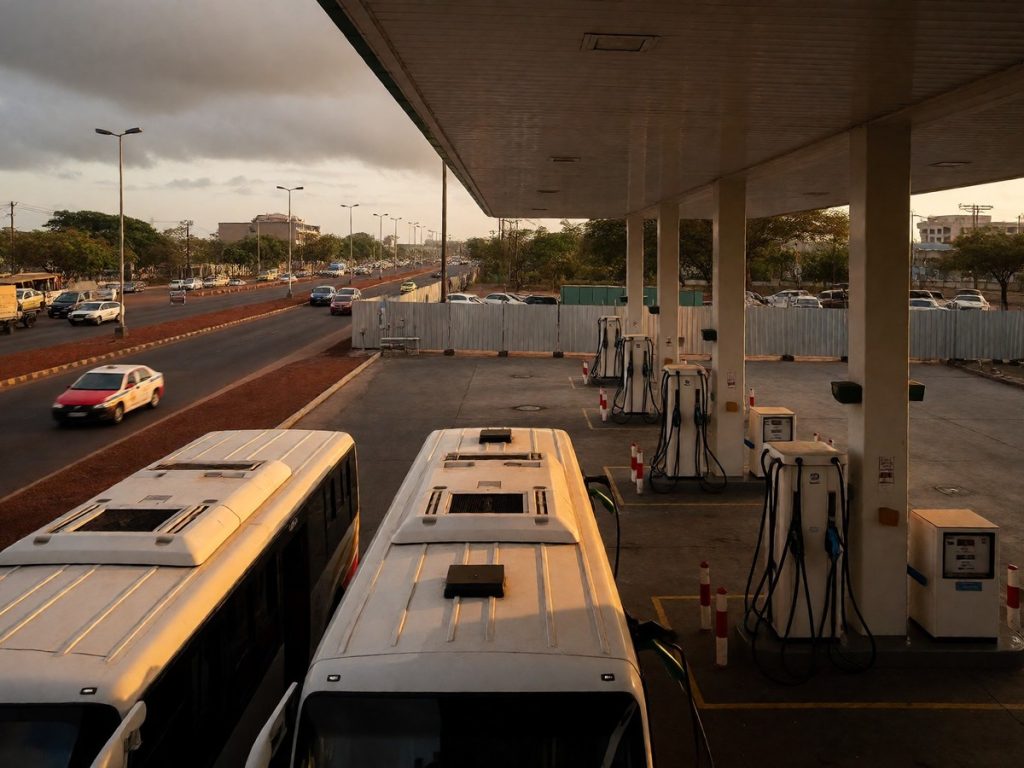
The replacement of internal combustion engine vehicles with electric vehicles will alter Ghana’s petroleum economy. While petroleum remains essential for aviation, shipping and industry, demand for road transport fuels will eventually plateau and decline. A reduction in refined petroleum imports will ease pressure on foreign exchange reserves and the cedi. The government must anticipate a decline in petroleum-tax revenues and restructure transport taxation through distance-based charging or EV registration fees. Oil marketing companies face an existential imperative to diversify into "energy service companies" by retrofitting fuel stations with fast-charging infrastructure and battery swapping bays. Ghana has a window to develop local capabilities in vehicle assembly, battery recycling, charging equipment manufacturing and software diagnostics.