Health risks for kitchen staff
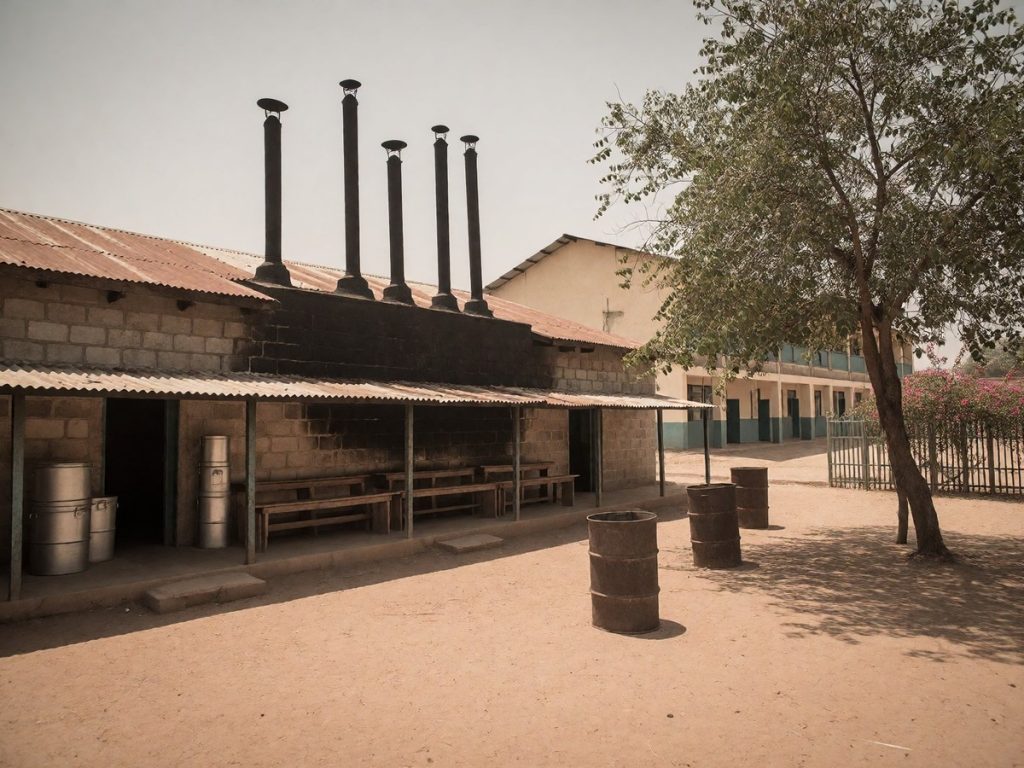
I find the health accounts from boarding school kitchens deeply disturbing. Mohammed Mansur Hussein, a lecturer at Tamale College of Education, recounted how a woman working in a boarding house kitchen died from bronchitis after she cooked with firewood and charcoal for many years. He also noted that another staff member lost her sight to cataracts because of smoke exposure, a condition that prevents her from working. These traditional fuels expose thousands of students and kitchen workers to avoidable risks. I think the reliance on charcoal in institutional kitchens remains a massive health failure for those working in enclosed spaces. These accounts raise serious questions about how schools protect the health and safety of workers who prepare meals for students.
Research findings and NPA response
Dr. Hawawu Hussein from Tamale Technical University provides data that makes these stories even more alarming. Her study of more than 1,200 mothers and babies at medical centers in Tamale and Savelugu found that babies whose mothers used charcoal or firewood had approximately four times the odds of suffering coughs and colds compared to babies from households using LPG or electricity. Additionally, her research showed that pregnant women who cook with charcoal face approximately one-and-a-half times the risk of preterm birth compared to those using gas or electricity. These women and children spend between three and seven hours daily in or around kitchens where fine particles from smoke penetrate deep into the lungs. The researcher explained that these particles cause irritation and increase the risk of respiratory illnesses. Eunice Budu Nyarko, the Director of Consumer Services at the National Petroleum Authority, encouraged schools to adopt LPG because it is one of the cleanest and most efficient fuels available. She noted that kitchen workers in boarding houses and halls of residence are particularly vulnerable because they spend long hours cooking large amounts of food in enclosed spaces. She also observed that LPG adoption in northern Ghana is among the lowest in the country. The National Petroleum Authority organized sensitisation exercises at Tamale College of Education, Bagabaga College of Education, Tamale Technical University, the Dungu Campus of the University for Development Studies, St. John Bosco College of Education, the UDS Navrongo Campus, the Midwifery Training College, and Bolgatanga Technical University.