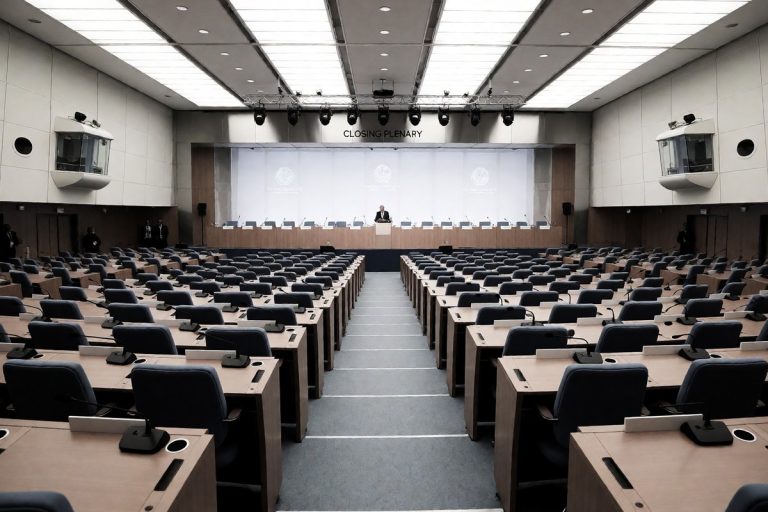

The United Nations climate negotiations in Antalya, Turkiye, exceeded their scheduled closing time by more than 44 hours after the European Union, Panama, and the Marshall Islands rejected a draft agreement that omits explicit mentions of fossil fuels. Turkish Environment Minister Murat Kurum released the 10-page document in the early hours of Sunday. This left delegates only three hours to raise objections or request changes before a final meeting was called. The draft refers to the 2023 Dubai deal regarding transitioning away from fossil fuels but avoids the terms "fossil fuels," "oil," "coal," or "phase-out" entirely. Ireland’s Minister for Climate, Energy and the Environment, Darragh O’Brien, criticized the omission while he represented the European Union. "It’s unconscionable that we would have a climate act that makes no reference to fossil fuels," O’Brien said. He stated the bloc would not endorse a decision that makes no mention of the primary driver of climate change and would not accept a COP that "greenwashes fossil fuels." Russia supports leaving explicit references to fossil fuels out of the final agreement, as it shows the deep divisions among countries over how to address the production and use of coal, oil, and gas.
The proposed agreement includes a specific electrification target and a target for carbon capture technologies.
| Target Area | Proposed Goal |
|---|---|
| Global electricity share of final energy consumption (35×35) | 35% by 2035 (from ~21%) |
| Carbon capture, reuse, and storage | 1 billion metric tonnes |
The electrification target seeks to increase electricity’s share of total final energy consumption from approximately 21 percent to 35 percent by 2035. This goal requires countries to expand electricity use in sectors like transport and industrial production. To achieve this, countries must replace petrol and diesel-powered vehicles with electric alternatives or use electricity instead of coal in certain industrial processes. Climate Analytics chief executive Bill Hare said electrification alone will not suffice to reduce global warming if fossil fuels continue to power electricity generation. The draft also proposes supporting technologies that capture, reuse, and store one billion metric tonnes of carbon dioxide from industrial processes before it enters the atmosphere. While this approach helps industries that struggle to reduce emissions through renewable energy, Rachel Cleetus of the Union of Concerned Scientists said the world cannot limit global warming without a rapid reduction in fossil fuel use.
Panama’s environment minister, Juan Carlos Navarro, accused the negotiations of being held hostage by a "petroleum mafia." Panama also threatened to formally object to any final agreement that does not include a cap on oil production and increased financing for developing countries. The European Union rejected the draft because it falls short of the action required to keep the 1.5°C target within reach and fails to address the needs of communities on the frontlines of climate change. The bloc also raised concerns that the proposal does not adequately respond to the needs of developing countries. It further questioned the document’s treatment of scientific evidence, specifically the role of the Intergovernmental Panel on Climate Change. The EU maintained that the disagreement was not driven by climate finance, though it remains committed to tripling adaptation finance and improving access to funding for vulnerable communities. O’Brien argued that the consensus-based nature of the United Nations process cannot justify an outcome lacking ambition, and he said the need for consensus cannot become a driver for the lowest common denominator. He also cautioned that the decision could provide an investment prospectus for the fossil fuel industry. This draft is a failure because it ignores the root cause of the climate crisis. Preparations for COP32 in Addis Ababa, Ethiopia, will begin immediately.