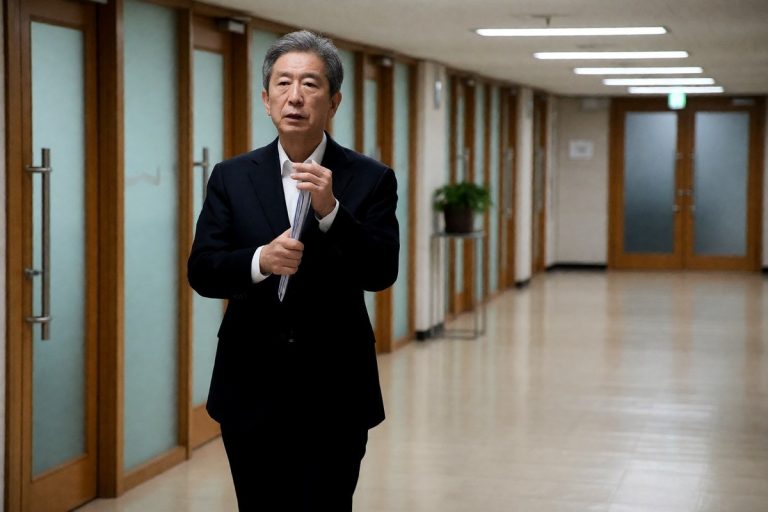

GTEC suspends new PhD admissions
I find this sudden freeze necessary to stop the decline in academic rigor. Professor Abdullah Jinapor, the Director-General of the Ghana Tertiary Education Commission (GTEC), suspended all new admissions into PhD programmes across Ghanaian tertiary institutions. This freeze stays in place until GTEC completes a nationwide audit of doctoral training. The Commission aims to protect the credibility of doctoral qualifications so that a PhD earned in Ghana commands respect at home and abroad. Jinapor spoke at the 19th Congregation of the University of Mines and Technology (UMaT) in Tarkwa, where he explained that the review will assess the accreditation status of programmes, student enrolment, qualifications of supervisors, research facilities, completion rates, and the conduct of thesis examinations. GTEC has also requested that all universities offering PhD programmes submit data regarding the programmes they run to allow for this evaluation. The Director-General stated that the goal is to ensure that doctoral training remains a rigorous process for all candidates.
| Audit Focus Area |
|---|
| Accreditation status of programmes |
| Student enrolment figures |
| Qualifications of supervisors |
| Research facilities |
| Completion rates |
| Integrity of thesis examinations |
Problems with commercial PhD programmes
Jinapor expressed concern that some institutions admit large numbers of doctoral candidates without the qualified supervisors, laboratories, library resources, and funding needed to support them, which causes supervision to suffer and research quality to decline significantly for all students. He cited an institution that admitted more than 250 PhD students, including 52 into a single programme, as a prime example of the severe concerns surrounding enrolment levels and the quality of doctoral training. I think it is ridiculous that any institution would admit 52 students into a single PhD programme. Jinapor said that some accredited universities have resorted to treating PhD programmes "as a commercial product" following GTEC’s clamping down on fake and honorary doctorates. He warned that institutions found to be running doctoral programmes primarily for financial gain risk having them suspended, whereas those meeting the required academic standards, such as UMaT, will be allowed to continue their current programmes. He noted that the growth in the intake of PhD candidates must never outpace capacity because when one supervisor carries too many candidates, supervision suffers, completion is delayed, and research quality declines for the students. He asked how a lecturer could possibly supervise such large groups while still managing to publish research. He emphasized that doctoral education produces the next generation of researchers, lecturers, and policy thinkers, but this cannot happen if institutions prioritize money over academic capacity.
UMaT performance and staffing news
UMaT is a positive example for the Commission. At the Tarkwa ceremony, UMaT graduated 3,338 students, including six PhD graduates. Jinapor cited UMaT as being reasonable and getting it right because, for a school of this size, graduating six candidates is very reasonable. He said GTEC will allow institutions like UMaT to continue their programmes while stopping those that produce doctorates solely for profit. Jinapor also dismissed claims that GTEC recruits lecturers for universities. He said recruitment remains the responsibility of each institution under its own Act, statutes, and appointment procedures, and that this autonomy remains fully intact. GTEC only facilitates access to qualified PhD holders to help universities address academic staffing shortages. Through this initiative, GTEC identified 97 PhD holders who expressed interest in taking up academic positions to help address these staffing shortages. Jinapor also urged the University Teachers Association of Ghana (UTAG) and university authorities to recognize the Commission’s role in upholding academic standards while respecting the autonomy of tertiary institutions. He said that while GTEC maintains standards, the recruitment of staff remains the responsibility of each institution under its own Act, statutes, and appointment procedures.