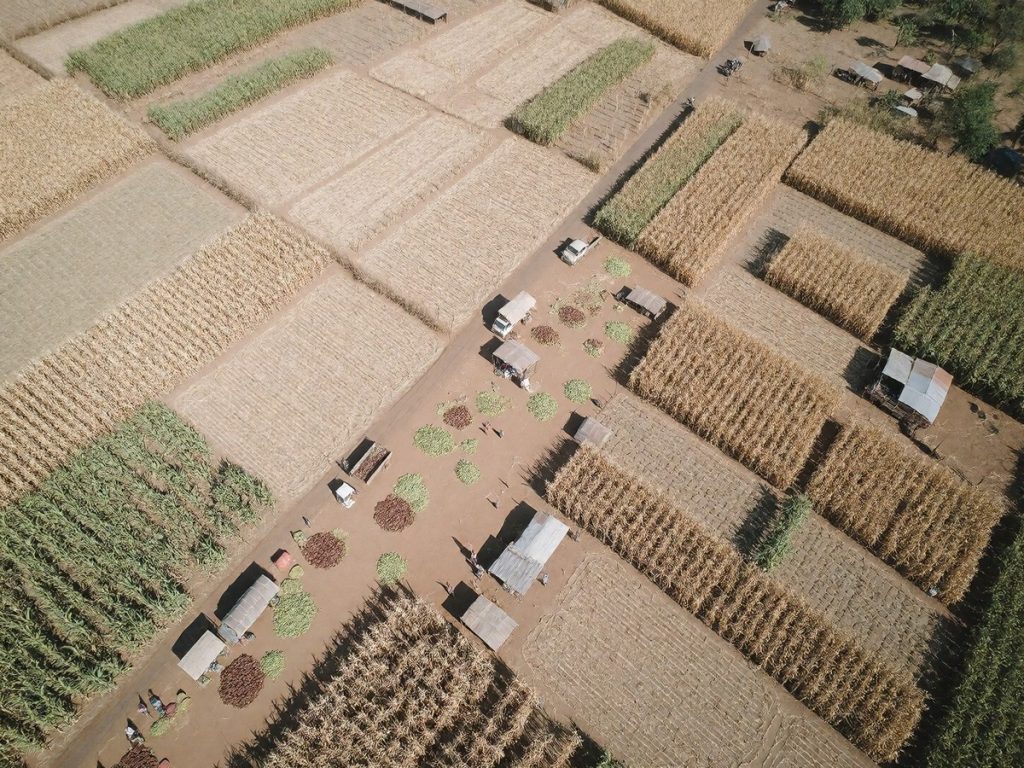
Frank Annoh-Dompreh, the Minority Chief Whip and Member of Parliament for Nsawam-Adoagyiri, told Parliament that a growing food glut leaves farmers and market women facing severe financial losses. Farmers invest heavily in cultivating maize, rice, cassava, yam, and soya beans but struggle to find buyers after harvest. Some farmers receive prices below their production costs, which prevents them from recovering investments, repaying loans, or paying workers for the next planting season. Market women also struggle to sell produce because consumers lack the purchasing power to buy the foodstuffs they transport to market. Annoh-Dompreh warned that if farmers abandon agriculture because they cannot sell their harvests, Ghana could shift from a food glut to food shortages. This crisis shows weaknesses in the connections between production, market demand, storage, processing, and distribution. He argued the situation raises constitutional concerns regarding the State’s duty to promote economic development and welfare under Articles 34(1), 36(1), 36(2), 36(3), 36(5), and 103. He stated that a prolonged breakdown in food markets could deepen rural poverty, weaken household purchasing power, and expose the country to supply disruptions.
Storage gaps and budget discrepancies
The Minority Chief Whip questioned the effectiveness of the National Food Buffer Stock Company (NAFCO) and government spending. He referenced reports from May 2026 that showed NAFCO has a total storage capacity of 129,000 metric tonnes, yet only 40,000 to 44,000 metric tonnes are usable. He also noted a June 2026 report concerning 45 registered licensed buying companies and the following 2026 budget allocations:
| Category | Amount / Quantity |
|---|---|
| NAFCO Total Storage Capacity | 129,000 metric tonnes |
| Usable NAFCO Storage | 40,000 to 44,000 metric tonnes |
| Registered Licensed Buying Companies | 45 |
| 2026 Budgetary Support | GH¢100 million |
| Additional 2026 Budgetary Support | GH¢200 million |
| Total Strategic Food Reserve Support | GH¢300 million |
Annoh-Dompreh argued that these financial allocations must translate into tangible relief for farmers rather than remaining as figures on paper. He questioned the gap between reported capacity and actual available facilities, especially since the government provided GH¢300 million for strategic food reserves. NAFCO’s effectiveness depends on the actual quantities of food purchased and the promptness of payments to farmers. He also demanded that the Minister for Food and Agriculture explain the operational status of the 45 registered buying companies and the management of food imports.
Proposed interventions and parliamentary demands
Annoh-Dompreh proposed a seven-point intervention to rescue the sector. He called for an emergency food-purchasing programme through NAFCO that uses transparent pricing and provides prompt payments to farmers. He suggested that public institutions, such as schools, hospitals, the Ghana Prisons Service, and the Ghana Armed Forces, prioritize buying local food subject to quality and value-for-money requirements. To improve storage, he called for an audit of public warehouses, the rehabilitation of unusable facilities, and the expansion of infrastructure in farming communities. He urged the government to provide drying, grading, packaging, and cold-chain facilities, alongside a warehouse-receipt system to help farmers access financing.
He recommended that the government strengthen food processing to turn surplus produce into commercially viable products, such as processing cassava into gari, starch, and flour, tomatoes into paste, and maize and soya beans into animal feed. He proposed that the government restructure viable agricultural loans and provide affordable working capital to market women-led cooperatives. He called for improved distribution through aggregation centres, organized transportation, digital market information, and partnerships involving farmer cooperatives and market associations. Annoh-Dompreh demanded that the Minister for Food and Agriculture provide Parliament with detailed information on the volume of unsold produce by commodity and region, the number of affected farmers and cooperatives, and the current usable storage capacity. He also called for the parliamentary committees for Food, Agriculture and Cocoa Affairs; Finance; and Trade, Industry and Tourism to visit affected farming communities and markets to obtain first-hand information. He demanded a time-bound national intervention plan with clear targets and implementation timelines. He proposed creating safe systems to collect, preserve, process, and redistribute surplus food in partnership with local assemblies, processors, charities, and private distributors. He stated that farmers need buyers rather than sympathy.