Reviving the state-owned mine
I see the massive shift in scale at Tarkwa since Gold Fields took over the state-owned underground operation in 1992. The mine produced only 12,000 ounces of gold annually before the company invested $3 million for the operation and spent five years on prospecting. "It was a small underground operation producing up to about 12,000 ounces a year," Elliot Twum, the Senior Vice President and Managing Director, recounted. After the initial $3 million payment, Gold Fields spent five years operating the underground mine while conducting surface prospecting, drilling, and resource definition studies that eventually led to the establishment of its first heap-leach operation in 1998. Gold Fields spent more than $50 million to develop the surface operation. Before the takeover, the government had to supplement the mine by paying salaries, suppliers, and contractors and buying reagents to continue treating ore. I note that the company had to refurbish the winding machinery and the shaft infrastructure because of operational challenges that required government support to sustain the mine.
Operational capacity and assets
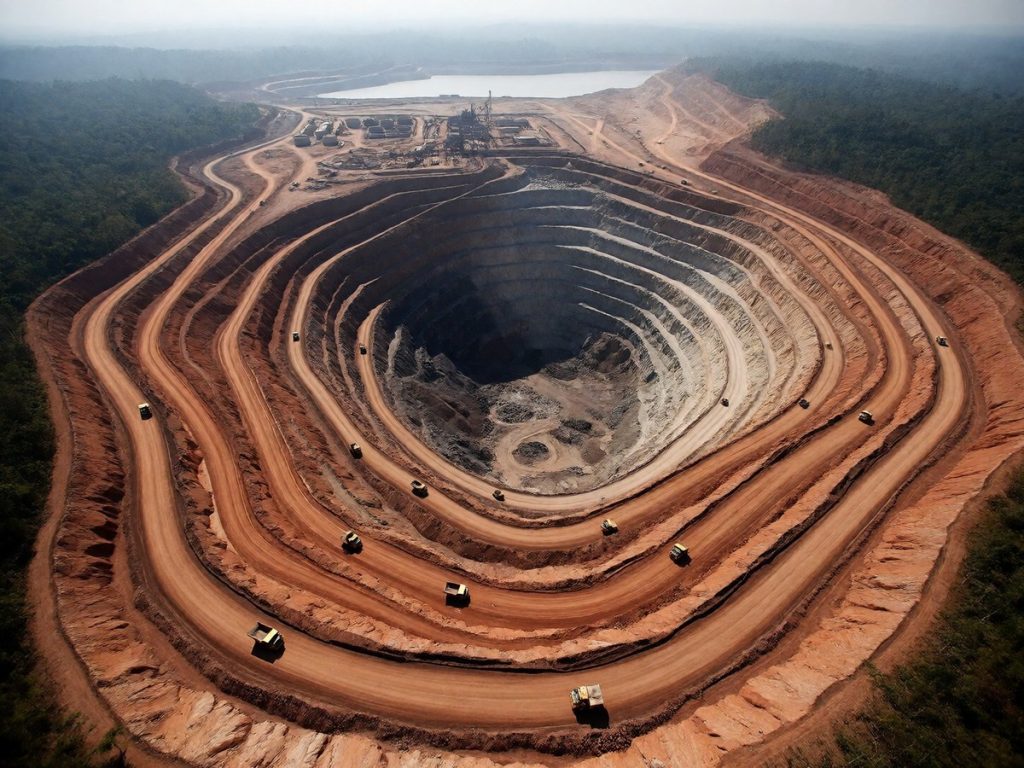
Tarkwa’s consistent but low-grade gold deposit requires moving 100 million tonnes of material every year to sustain production. Out of that total, 10 million tonnes is ore and 90 million tonnes is waste. I find the contrast with the Damang deposit significant, as Damang is a hydrothermal deposit with higher grades that requires closer-spaced drilling. Gold Fields expanded its operations by acquiring the northern tenement of the then Teberebie Gold Mine in 2000 and the Aboso Mine, now known as Damang, from the Australian company Rangers in 2002. The company established a carbon-in-leach plant in 2004 and upgraded it in 2008 to increase the capacity to process about 15 million tonnes of material. Gold Fields currently produces an average of about 500,000 ounces of gold annually at Tarkwa. The company is now seeking to renew the five leases issued in 1997 for the heap-leach operation before they expire in April 2027.
| Metric | Tarkwa Operation |
|---|---|
| Annual gold production | ~500,000 ounces |
| Annual material movement | 100 million tonnes |
| Annual ore volume | 10 million tonnes |
| Annual waste volume | 90 million tonnes |
| Processing capacity | 15 million tonnes |
| Lease expiration | April 2027 |