Boundary demarcation details
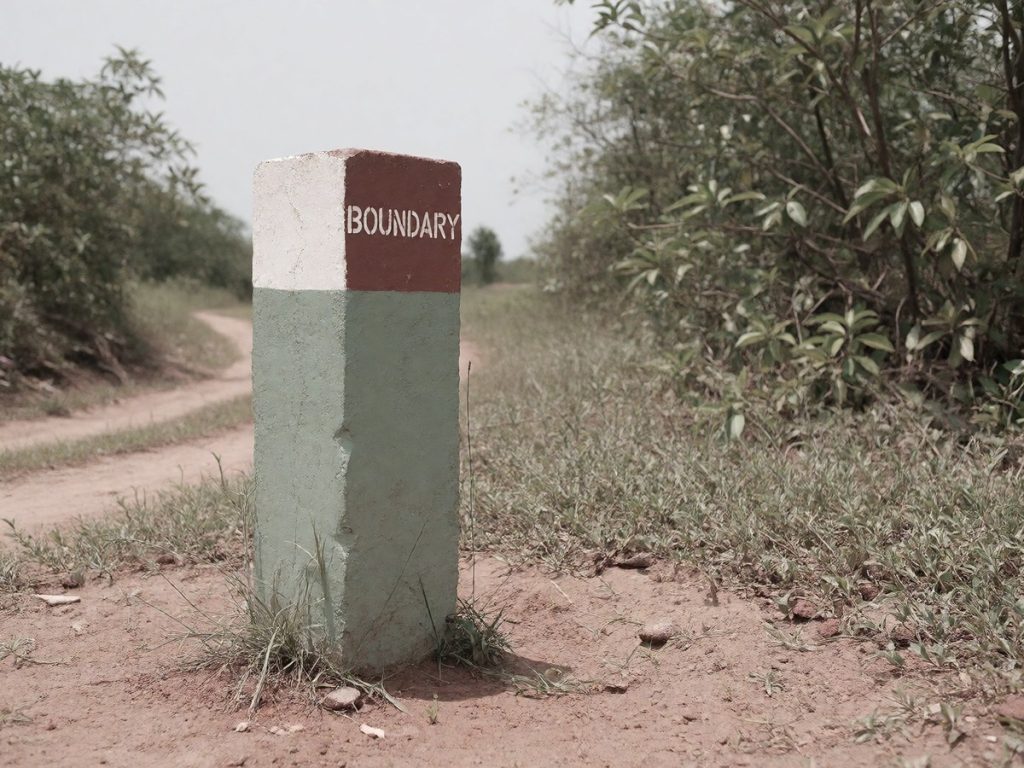
Ghana and Cote d’Ivoire are constructing 57 new international boundary pillars along their shared border as part of the joint land boundary reaffirmation programme. This project is the second phase. The second phase of the joint land boundary reaffirmation programme covers a 392-kilometre stretch extending from the Aowin Municipality in the Western North Region all the way to the Banda District in the Bono Region. Cote d’Ivoire is expected to supervise the construction of all 57 boundary pillars. The exercise officially launched at Niable, near Sefwi Oseikojokrom in the Western North Region. I find the scale significant.
Major General Anthony Ntem, the Commissioner-General of the Ghana Boundary Commission, says the exercise clarifies territorial limits, supports development planning, and minimises disputes. He tells residents the work will not disrupt legitimate cross-border movements or economic activities. He also urges residents to cooperate with the technical teams to ensure successful completion. Dr Diakalidia Konate, the Executive Secretary of Cote d’Ivoire’s National Boundary Commission, stresses that clearly defined international boundaries prevent conflicts, particularly across Africa. He calls on traditional authorities and residents of border communities to support the exercise and avoid spreading "misinformation" that could undermine the process. I think his warning is a blunt admission that local community friction remains a real risk.
Program specifications and scope
| Feature | Details |
|---|---|
| New pillars | 57 |
| Total stretch | 392 kilometres |
| Launch site | Niable, near Sefwi Oseikojokrom |
| Supervising nation | Cote d’Ivoire |
I view this demarcation project as a necessary step for territorial integrity. The programme helps the two countries safeguard peaceful relations and cooperation among communities along their shared border. Major General Ntem notes that the project aims to clarify limits to support development planning and minimise disputes. He says the exercise will not disrupt economic activities. The technical teams work to finish the 57 pillars to protect their borders and strengthen peaceful relations. This exercise follows the launch at Niable. Dr Konate’s call for traditional authorities to support the process shows the social weight of these boundary markers. I believe the project relies heavily on the cooperation of local residents to avoid the very conflicts the commissions want to prevent.