Local production is the priority
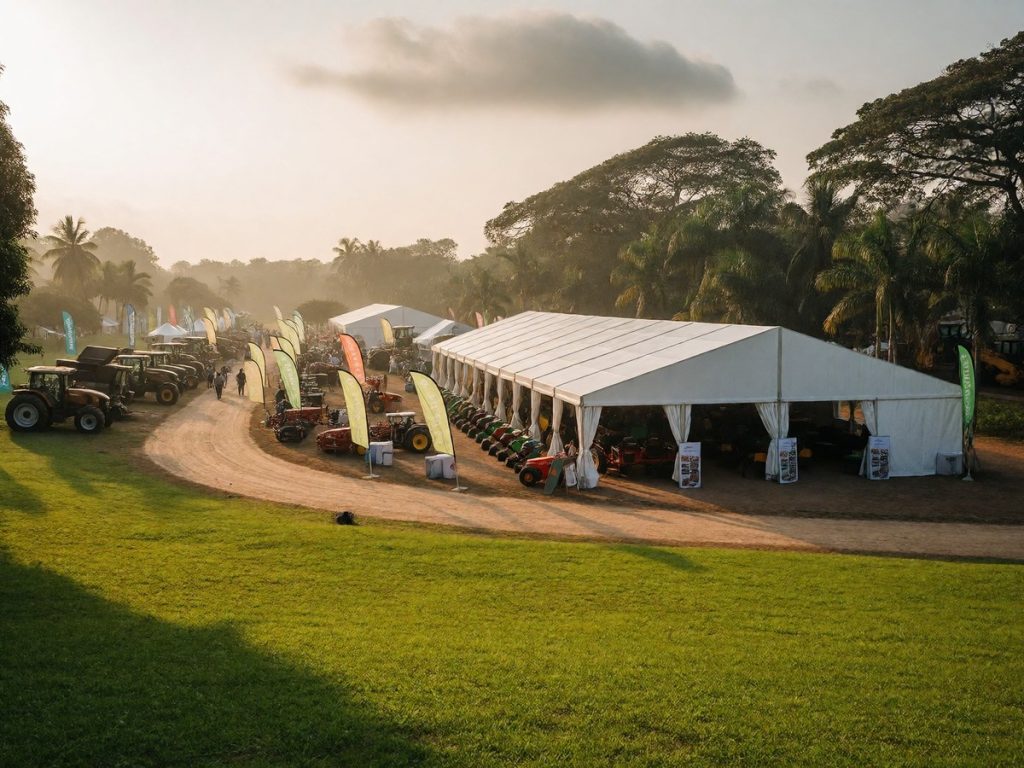
The government’s push for local production is clearly the most effective path to food security. Dr. Julius Debrah says that the administration of President John Dramani Mahama must increase local food production to reduce dependence on imports and build a stronger agricultural economy. At the launch of AgriFair 2026 at the Efua Sutherland Children’s Park in Accra, the Chief of Staff said agricultural transformation remains a major priority. He noted that reliance on imported food leaves the country exposed to international supply disruptions and exchange rate movements. The government addresses these challenges through the Feed Ghana Programme. This initiative provides improved seeds, fertilizer, mechanization, irrigation, and better extension services.
| Commodity | Target/Goal |
|---|---|
| Rice | Self-sufficiency by 2028 |
| Tomatoes | 400,000 tonnes annual production |
The government focuses on selected commodities: rice, maize, soybean, sorghum, tomatoes, onions, poultry, and livestock products. Dr. Debrah stated that food security cannot be achieved through government announcements alone but requires a strong partnership between farmers, businesses, financial institutions, research organizations, and the private sector. These interventions aim to create opportunities in food processing, transportation, storage, distribution, and retail. The administration’s Agriculture for Economic Transformation Agenda targets these specific sectors to build a profitable system.
Technology attracts young entrepreneurs
The development of agricultural technology is clearly the best way to attract young entrepreneurs to the sector. Dr. Debrah told AgriFair 2026 attendees that farming should be seen as a "serious business" capable of creating wealth rather than an "occupation of last resort". He challenged young people to recognize that the sector offers opportunities to build businesses that can compete within Ghana and beyond its borders. Young entrepreneurs can build successful businesses in agricultural technology, food processing, packaging, transportation, storage, marketing, and distribution. Dr. Debrah said the government is investing in improved seeds, fertilizer, mechanization, irrigation, and extension services to make farming more productive and reduce challenges for young people who enter the sector. He also noted growing food demand presents opportunities for those building businesses around local production.
The Chief of Staff commended Channel One TV and Citi FM for creating AgriFair as a platform to bring farmers, businesses, investors, and consumers together. He said exhibitions of this nature must generate real commercial relationships where farmers find buyers, processors secure raw materials, and investors identify viable opportunities. He urged financial institutions, technology providers, and private businesses to support a modern agricultural sector. He also told research institutions to develop practical solutions that respond to the everyday challenges farmers face. This modernization requires the private sector to treat agriculture as a viable commercial opportunity rather than a sector dependent solely on government support.